• Skip to primary navigation
  • Skip to main content
  • Skip to primary sidebar
  • Skip to footer

IPMojo

  • About IP Mojo
  • About Scott Coulthart
  • CONTACT
BOOK AN APPOINTMENT

IP

July 9, 2025 by Scott Coulthart

IMDb v DMDb: One Letter’s Difference Not Enough
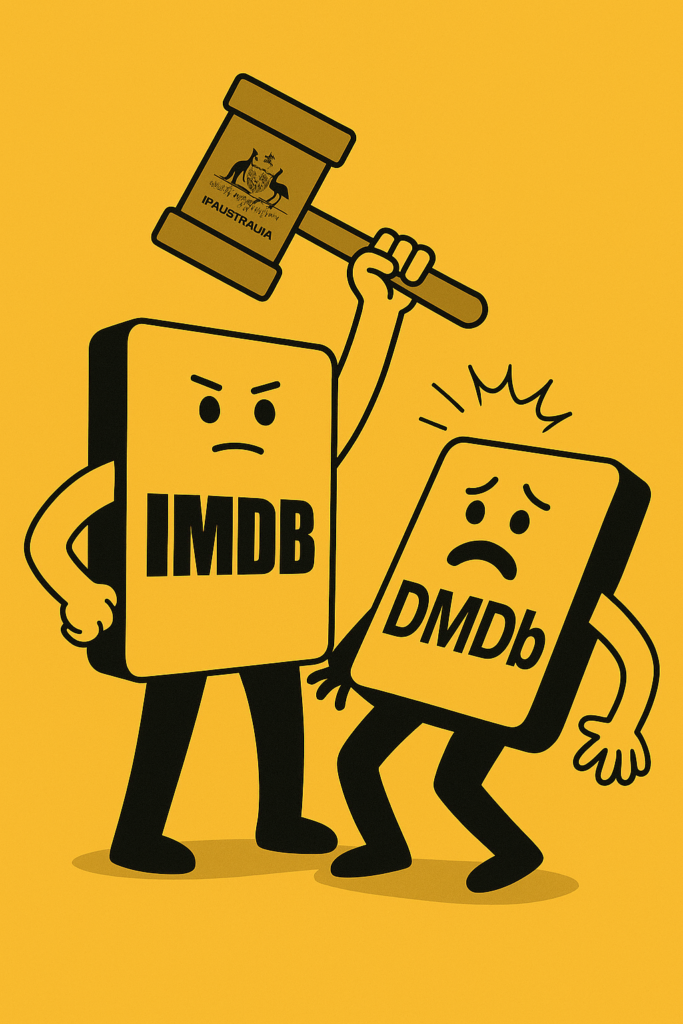
Zumedia Inc’s attempt to register DMDb as a trade mark in Australia fell flat—thanks to its awkward proximity to a far more famous acronym: IMDb.

Zumedia, a Canadian company behind a digital media platform called “Digital Media Database,” applied to extend its international trade mark registration for DMDb into Australia. But IMDb, the internet’s go-to entertainment database, wasn’t about to let that slide. Backed by nearly 30 years of global use and widespread recognition in Australia, IMDb opposed the extension under section 60 of the Trade Marks Act 1995.

IP Australia sided with IMDb. Despite the difference in the first letter, Delegate Tracey Berger found the marks visually and aurally similar, especially given the overlapping services—both related to searchable databases of entertainment content. Australian users, she held, could easily assume DMDb was affiliated with or endorsed by IMDb.

Zumedia tried to argue that DMDb was a unique acronym and that “Db” simply stood for “database.” Ironically, that only strengthened the opposition’s case: as the Delegate pointed out, consumers often remember brands imperfectly. The shared “-MDb” element was enough to trigger a mistaken belief in a connection.

She also referenced prior cases—including AAMI and Tivo v Vivo—to reinforce the point: when a well-known mark has a strong reputation in the same field, even small differences won’t eliminate the risk of confusion.

The outcome?  Extension of protection refused. Costs awarded against Zumedia.

🎬 IP Mojo Takeaway: If your brand sits one letter away from an iconic name in the same industry, don’t count on slipping through. Trade mark law doesn’t look kindly on near-misses that come too close to the main act.
 

Filed Under: Entertainment, IP, Trade Marks Tagged With: Entertainment, IP, Trade Marks

July 8, 2025 by Scott Coulthart

Brand Control, Part 3: “Great Minds Think Alike?” — Clearance Searching and Avoiding Brand Disasters

You’ve found the perfect brand name. It’s clever. Catchy. The domain is available. The branding agency loves it. You’re ready to roll.
But before you commit… have you checked if someone else already owns it?

Why Searching Is Not Optional

It’s one of the most common — and costly — mistakes: a business pours time, energy, and tens of thousands of dollars into branding, only to receive a cease and desist letter from a prior trade mark owner. Worse still, they may find themselves facing an opposition at IP Australia, a rebrand mid-launch, or a lawsuit they never saw coming.

Trade mark clearance searching is your early warning system. Done properly, it can help avoid disputes, legal fees, rebranding costs, and loss of customer goodwill.

And it doesn’t have to be complicated.

Types of Searches

Not all searches are created equal. Depending on your budget, timing, and risk tolerance, here are the key search types you might consider:

  • Knockout search: A quick check of the Australian Trade Mark Register for identical or near-identical marks in your relevant classes. Fast and cheap, but limited in scope.

  • Full availability search: A comprehensive legal review of both registered marks and unregistered use — including business names, social media handles, websites, and domains. This helps you identify potential passing off or s 60 (Trade Marks Act 1995) issues where someone may not have registered their mark, but has a strong reputation.

  • International searches: If you’re planning to operate or file overseas, don’t stop at Australia. Check WIPO’s Global Brand Database, the Madrid Monitor, and key national registers (USPTO, EUIPO, etc). Remember: first to file wins in many countries.

What to Watch For

Even if your exact mark isn’t on the register, you still need to look out for:

  • Similar marks in the same or closely related goods/services
    (e.g. SwiftTech for software vs Swiftek for IT services)

  • Slight spelling variations or phonetic equivalents
    (e.g. Kwik Kleen vs Quick Clean)

  • Well-known unregistered brands
    Even without registration, a brand with a strong reputation can stop yours under section 60 of the Act — if consumers are likely to be confused.

💡 IP Mojo Tip

Clearance is brand insurance. The earlier you search, the cheaper your pivot if needed — and the more confidently you can build your brand knowing it won’t collapse under a letter of demand.

Filed Under: IP, Trade Mark Series, Trade Marks Tagged With: IP, Trade Mark Series Part 3, Trade Marks

July 7, 2025 by Scott Coulthart

Brand Control, Part 2: “Born to Stand Out” — Choosing a Trade Mark That Can Actually Be Registered

Not every brand name is created equal. In the eyes of the law, the more descriptive your mark, the weaker your rights.
That might sound counterintuitive — especially to marketers and founders who want a brand name that says exactly what the business does. But from a trade mark perspective, the best brand names do more than describe — they distinguish.

The Distinctiveness Spectrum

Trade mark registrability hinges on one core concept: distinctiveness. The more distinctive a mark is, the more likely it is to be accepted by IP Australia — and the easier it will be to enforce down the track.

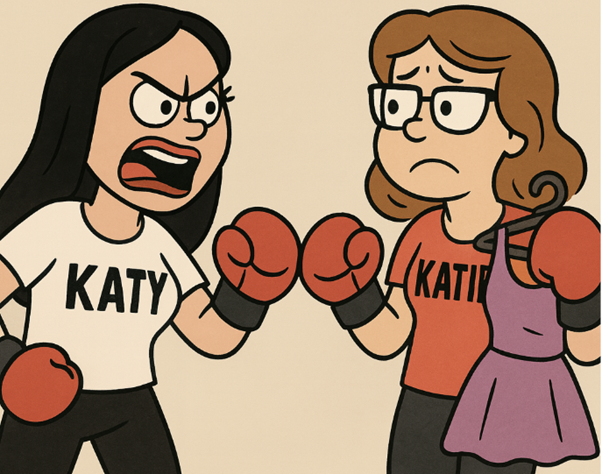
You can think of trade marks as falling on a distinctiveness spectrum:

  • Generic terms (like Milk for milk) are never registrable. They’re the language of the trade, not a badge of origin.

  • Descriptive marks (like Quick Loans for a lending service) are difficult to register unless you can prove long and widespread use that’s made the name distinctive over time.

  • Suggestive marks (like Netflix for entertainment) can sometimes succeed if they require a leap of imagination and aren’t used commonly in the industry.

  • Arbitrary marks (like Apple for computers) are legally strong — because they don’t describe the goods at all.

  • Fanciful marks (like Xero or Google) are invented words. These tend to be the strongest of all: highly protectable and uniquely tied to their brand.

Common Pitfalls When Picking a Name

Some names feel brand-like but run into trouble at the registration stage. Here are a few traps to watch for:

  • Geographic references: A name like Brisbane Plumbing Services might be accurate, but it’s also highly descriptive and hard to protect. It tells people what you do and where — but not who you are.

  • Industry terms: A name like LegalEdge might sound sharp, but if it clearly relates to legal services, it may lack the distinctiveness needed for registration — especially if similar names are already on the register.

  • Foreign language words: Just because a word isn’t in English doesn’t mean it’s distinctive. If the translation is something generic (like Dolce, which means “sweet”), it may still be treated as descriptive.

  • Initialisms and acronyms: These can be difficult to protect unless the public has come to associate them with your business (think IBM or ANZ). Until then, they often get treated as meaningless strings of letters.

💡 IP Mojo Tip

If your brand name tells your whole story at first glance, there’s a good chance it’s too descriptive to protect. Aim for memorability, not just meaning. A good trade mark doesn’t explain — it sticks.

Filed Under: IP, Trade Mark Series, Trade Marks Tagged With: IP, Trade Mark Series Part 2, Trade Marks

July 4, 2025 by Scott Coulthart

Perry v Perry – Round 3 in the High Court

The long-running IP clash between Australian designer Katie Taylor (aka Katie Perry) and US popstar Katheryn Hudson (aka Katy Perry) has now reached the High Court. Both sides have filed their submissions—and the gloves are well and truly off.
Let’s unpack the arguments.


🎤 The Trade Mark at War

At the heart of the dispute is Taylor’s registered mark KATIE PERRY for clothing, registered in 2009. Hudson’s team argues that it should never have been allowed to stay on the register—because of her own fame under the name Katy Perry, and the likelihood of confusion in the public mind.

This fight has already been through:

  • The Federal Court (where Taylor won on infringement, but the respondents failed to cancel her trade mark),

  • and the Full Federal Court (which overturned the trial judge and ordered cancellation under ss 60 and 88(2)(c)).

Now, Taylor’s appeal to the High Court gives us an opportunity to see how the highest court will treat the tricky interplay between reputation, confusion, and celebrity brand extension.


⚖️ Key Appeal Issues

The submissions squarely raise three points of trade mark law importance:

  1. Reputation Must Be in a Trade Mark, Not Just a Name
    Taylor argues (citing Self Care IP) that reputation in a person isn’t enough—section 60 requires a reputation in a trade mark used to distinguish goods or services. The respondents say that “Katy Perry” was functioning as a mark in connection with music and entertainment—even if not for clothes—by the priority date.

  2. Deceptive Similarity ≠ Confusion from Reputation
    Taylor says the Full Court wrongly blurred section 60 with the s 10 concept of deceptive similarity, using “imperfect recollection” logic that belongs elsewhere. She maintains that just because the names look similar doesn’t mean there’s a s 60 ground for cancellation unless confusion arises because of the earlier mark’s reputation.

  3. Discretion Under s 89: Who’s at Fault?
    The Full Court held that Taylor’s act of applying for the mark—with knowledge of Katy Perry’s fame—was enough to defeat the saving provision in s 89. Taylor argues this turns s 89 into a dead letter. Is the act of registration itself always a fault? If so, what’s left for discretion to do?


👑 Celebrity Brands and Trade Mark Realpolitik

The respondents press the idea that by 2008, there was an established trend of pop stars launching fashion lines—and that any member of the public hearing “KATIE PERRY” on a swing tag might assume a connection with the singer. They argue:

  • Reputation in entertainment was enough to ground confusion over clothes;

  • The law shouldn’t insist on technical “use as a trade mark” when real-world fame does the work.

Taylor says: Not so fast. Reputation should attach only to actual marks used to distinguish goods. And if the singer hadn’t sold clothes in Australia before the priority date—let alone registered a mark for clothing—why should she get a monopoly over a local designer’s name?


🧵 Threads to Watch

This appeal gives the High Court a chance to clarify several issues that matter beyond this case:

  • What counts as reputation in a “trade mark”? Is global fame enough?

  • Does fame create a shadow monopoly over unrelated goods where the celebrity hasn’t yet traded?

  • When is confusion “likely”? Must it be tied to reputation for the same goods?

  • Is s 89 still alive? Or does knowledge at the time of filing always kill it?


🪙 Final Stitch

This is a rare IP battle where both sides have established, legitimate reputations—and where delay, co-existence efforts, and evolving fame all muddy the waters. Whatever the High Court decides, it’s likely to have ripple effects across celebrity branding, merchandising strategy, and the interpretation of section 60.

🧵 Stay tuned.

Filed Under: Entertainment, IP, Trade Marks Tagged With: Entertainment, IP, Trade Marks

July 3, 2025 by Scott Coulthart

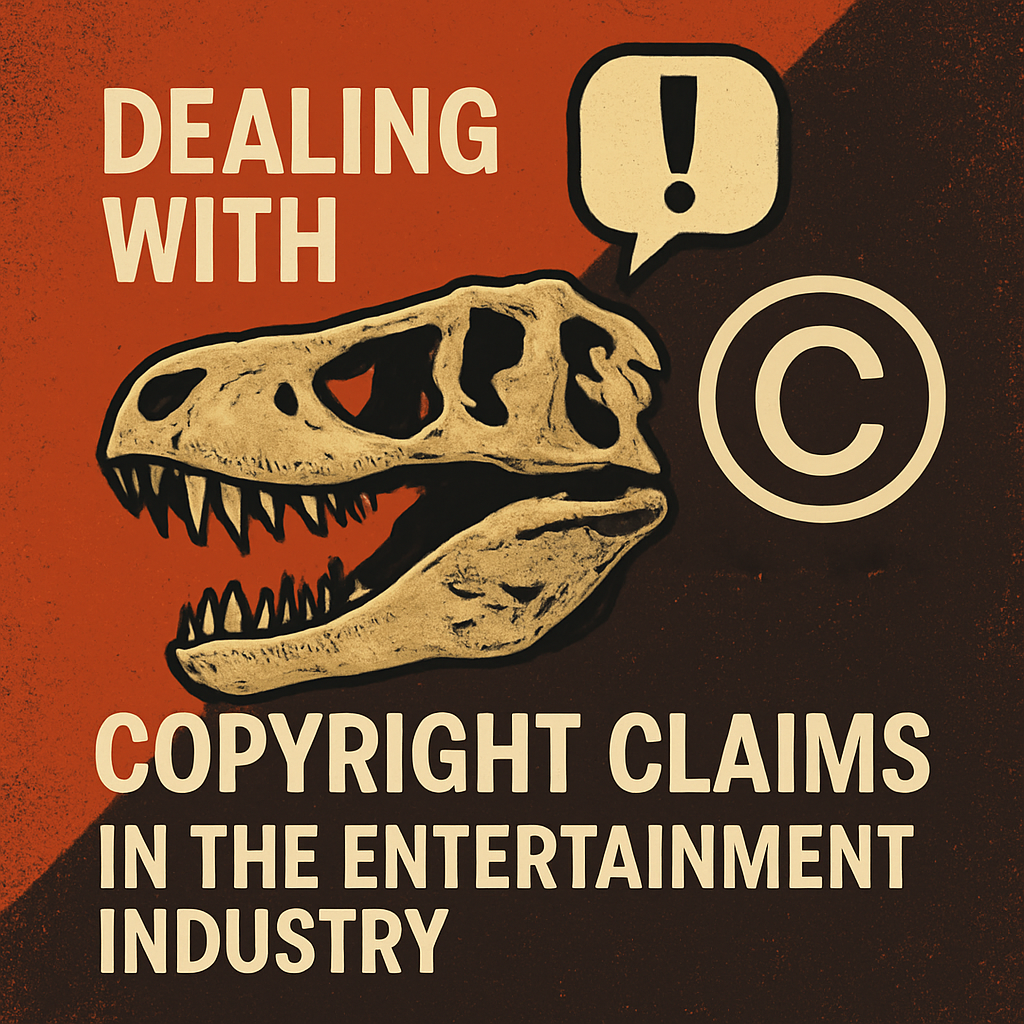
Extinct Rights and Existential Threats: Copyright Claims that Shouldn’t Bite, But Still Do

In the world of entertainment, nothing stops a production faster than a copyright claim — even when the claimant doesn’t actually have a leg (or claw) to stand on.

Take, for example, a recent kerfuffle involving a dinosaur skull. Yes, a dinosaur skull. A marketing team used a stock image of a fossil for a film poster. Shortly after, they received a cease and desist from someone asserting copyright over the image — or more nebulously, over “the representation” of the skull itself. A fossilised jawbone that hasn’t had an original idea in 66 million years? Not the most obvious candidate for copyright protection.

And yet, the production company found itself in a bind. Time was short, the distributor was nervous, and the platform had already flagged the content under its automated systems. Legally, the claim didn’t stack up. Commercially, it still had teeth.

Welcome to the prehistoric jungle of copyright brinksmanship.

When Copyright Doesn’t Exist (But the Threat Still Does)

Under Australian law — and most copyright regimes — not everything is capable of being protected:

  • Natural formations (like fossils, mountains, or sea shells)? No copyright.

  • Basic factual photos taken with no creativity (e.g. museum catalogue snaps)? Likely not protected, or may already be in the public domain.

  • Ancient artefacts or artworks? Copyright has almost certainly expired — assuming it existed in the first place.

Even modern reproductions of old things don’t necessarily create new rights. The High Court in IceTV Pty Ltd v Nine Network Australia Pty Ltd [2009] HCA 14 was crystal clear: originality matters. Sweat of the brow won’t cut it.

But that doesn’t stop people — or bots — from claiming rights anyway. Particularly when money, notoriety, or mistaken beliefs are at play.

The Problem with Platform Panic

Most modern disputes don’t start in court — they start with takedown notices:

  • A DMCA claim to YouTube,

  • A flagged post on Meta or TikTok,

  • A licensing hold-up at the distributor level.

These processes are fast, opaque, and slanted toward rights holders (real or imagined). Fighting them requires time and evidence. Meanwhile, your release window slips away and your investor starts asking questions.

What Should You Do? Five Jurassic Principles

1. Know What You’re Looking At
Ask: Is the underlying subject matter capable of copyright protection? A taxidermied tiger, a Greco-Roman bust, or a piece of driftwood might not pass the threshold.

2. Trace the Chain
Even if the subject is unprotectable, the photograph or render might be. But who owns it? Was it created under licence? Is it truly original?

3. Don’t Assume the Claimant Understands Copyright Law
Many people think “I took a photo, so I own the image of the thing in the photo.” That’s not how it works. Be prepared to explain gently (or not so gently).

4. Be Ready to Push Back
If you’re legally in the clear, a well-structured rebuttal often gets the job done. Cite relevant case law, identify flaws in the claim, and invite the claimant to back down — preferably in writing.

5. But Be Prepared to Deal
Sometimes, you do a deal not because the claim is strong, but because the alternative is too costly. A nuisance settlement, a rights clarification, or a rapid poster redesign might save your release. That’s not weakness — that’s triage.

Final Thought: A Question of Extinction

When copyright claims are fossilised nonsense, you don’t need to panic — but you do need to be strategic. Entertainment projects move fast, and delays can cost more than a licence ever would. Know your rights, document your sources, and don’t be afraid to call a bluff.

But also? Don’t let a prehistoric claim derail your production. Even in the Jurassic jungle of IP, survival is about knowing when to roar and when to run.

Filed Under: Copyright, Entertainment, IP Tagged With: Copyright, Entertainment, IP

July 2, 2025 by Scott Coulthart

Brand Control, Part 1: “What’s in a Brand?” — The DNA of Distinctive Value

When most people talk about a “brand”, they’re really thinking about a vibe: a gut-level feel, a cultural footprint, an aesthetic. And all of that matters — but from a legal perspective, a brand only really lives and breathes through what you can protect.

At the heart of that protection? Trade marks.

Brand vs Trade Mark: Not Always the Same Thing

A brand is the reputation your business builds through what it does, says, and looks like. A trade mark is a sign or symbol used as a badge of origin — a way to distinguish the owner’s business, products, and services from those of others.

A registered trade mark is that same badge formally registered under legislation that affords it legal rights — rights designed to protect the recognisable signs and symbols by which customers identify the owner’s brand.

Think of a trade mark as the legal spine holding the commercial body upright.

Your brand might include:

  • Business name

  • Logo

  • Slogan

  • Product names

  • Domain names

  • Get-up (packaging, shape, colour schemes)

  • Sound (think the McDonalds jingle)

  • Even scent (yes, that’s a thing — more on that in Part 7)

But unless those elements are distinctive and protected, you might be pouring brand equity into a bucket full of holes.


No Protection = No Control

Without trade mark protection, you can’t (at least, not easily):

  • Stop others from using confusingly similar names

  • Prevent others from trading off your hard-earned reputation
  • License or assign your brand with confidence

  • Preserve your market position if you pivot, grow, or sell

A common law claim for passing off or a misleading/deceptive conduct claim under the Australian Consumer Law requires proving your reputation and that the public is likely to be misled — no small task.

While copyright or design rights might help in some fringe cases (e.g. logo artwork or packaging design), they won’t stop someone launching a rival brand with a near-identical name or slogan.

However, if your trade mark is registered, you don’t need to prove reputation or deception — registration itself gives you a presumptive legal right to stop infringing use.  All you need to show is that the other person’s mark is substantially identical or deceptively similar to yours and that your first use of your mark precedes their first use of theirs.


Why Distinctiveness Is Your Best Friend

We’ll dive deeper into distinctiveness in Part 2, but for now: the more your trade mark stands out from what others are doing, the stronger your legal position.

Names like Kodak, Spotify, or Qantas are powerful precisely because they weren’t trying to “say what they do” — they were trying to be remembered. Compare that to generic names like The Shoe Company or Best Accounting Services — impossible to protect, easy to copy, and legally feeble.


💡 Key Takeaway

A brand isn’t a logo, a font, or a vibe — it’s the sum of the signals that connect your offering to your audience. Trade marks let you own and protect those signals. Without them, you’re not building an asset — you’re renting attention.

Filed Under: IP, Trade Mark Series, Trade Marks Tagged With: IP, Trade Mark Series, Trade Mark Series Part 1, Trade Marks

  • « Go to Previous Page
  • Go to page 1
  • Interim pages omitted …
  • Go to page 8
  • Go to page 9
  • Go to page 10
  • Go to page 11
  • Go to page 12
  • Interim pages omitted …
  • Go to page 14
  • Go to Next Page »

Primary Sidebar

Recent Posts

  • Unf*cking the Register: IP Australia Accepts “UNFVCK YOURSELF” Trade Mark
  • Firework Fizzles (For Now): The High Court Re-stitches the Katy Perry Trade Mark Battle
  • 🏇 When the Race Stops a Nation — Who Owns the Moment?
  • AI Training in Australia: Why a Mandatory Licence Could Be the Practical Middle Ground
  • AI-Generated Works & Australian Copyright — What IP Owners Need to Know

Archives

  • March 2026 (2)
  • November 2025 (1)
  • October 2025 (14)
  • September 2025 (21)
  • August 2025 (18)
  • July 2025 (16)
  • June 2025 (21)
  • May 2025 (12)
  • April 2025 (4)

Footer

© Scott Coulthart 2025