Bed Bath ‘N’ Table Not Throwing In the Towel
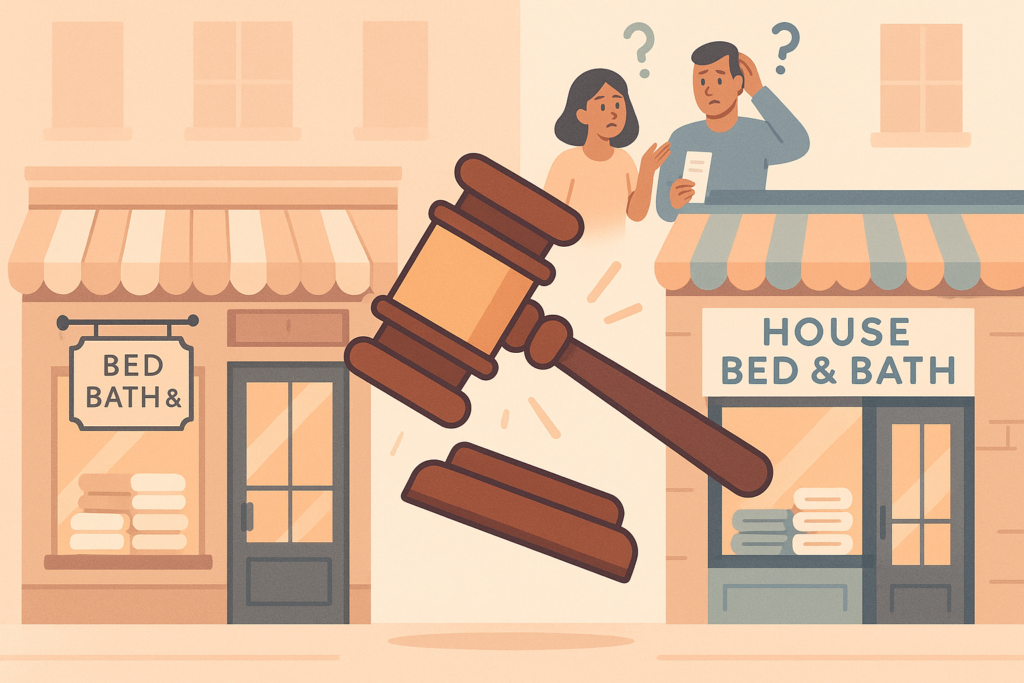 What happens when your new brand smells a little too much like the towels next door?
If you’re Global Retail Brands Australia (GRBA) — the team behind House and its spinoff House Bed & Bath — you might find yourself embroiled in a multi-front legal fight with long-standing soft homewares heavyweight Bed Bath ‘N’ Table (BBNT). And if you’re BBNT, you might soon be on your way to the High Court of Australia to argue that while a trade mark might not be confusing, a brand strategy can still mislead.
GRBA, long known for “hard homewares” like kitchenware, took a foray into “soft homewares” by launching a new store format under the brand House Bed & Bath. The problem? BBNT had been using Bed Bath ‘N’ Table for over four decades and held multiple trade mark registrations.
BBNT sued under both the Trade Marks Act 1995 and the Australian Consumer Law (ACL), alleging trade mark infringement and misleading and deceptive conduct. While the primary judge in the Federal Court agreed GRBA’s branding was misleading under the ACL (and upheld passing off), they did not find trade mark infringement. The marks weren’t deceptively similar, said the Court — but the Court found GRBA’s conduct was misleading/deceptive and also constituted passing off.
GRBA appealed, and in a twist befitting a soap opera about linen stores (Doylies of Our Lives? Folded and the Beautiful?), they won. The Full Federal Court overturned the misleading conduct and passing off findings — not because BBNT didn’t have a reputation, but because that reputation didn’t extend far enough to make “Bed & Bath” independently distinctive. The court also pointed to widespread descriptive use of “bed” and “bath” by other retailers and found that GRBA’s actions, while perhaps careless or even opportunistic, didn’t cross the legal line into deception.
BBNT sought special leave to appeal to the High Court. And now the top court in the land will get to decide how much weight to give to brand reputation, wilful blindness, and near-miss branding in Australia’s consumer protection and passing off law.
For trade mark lawyers and marketing advisors, this case is shaping up to be the test of the limits of brand mimicry in retail. Can a well-established business with a household brand name claim monopoly over combinations of common words like “bed” and “bath”? And what level of consumer confusion — or intent to confuse — is enough?
The main takeaways seem to be:
-
Trade mark law and consumer law don’t always walk in lockstep. You can lose one claim and win the other, based on different thresholds and factual assumptions.
-
“Wilful blindness” is not enough by itself. The Federal Court was clear that being strategic (or even a bit cheeky) isn’t the same as being legally deceptive — though the High Court may weigh in differently.
-
Descriptive branding is always a high-risk game. If your mark relies on common category words (like “bed” and “bath”), even 40 years of use might not give you exclusive rights.
-
Appealing to the High Court is rare and consequential. This will be a must-watch for IP lawyers — and one that could reshape how consumer law operates alongside trade mark protection.
Stay tuned for when the High Court beds down the final answer. For now, the towels are fluffed, the pillows are puffed, and the soft homewares sector is on notice.
For the Hitchhiker’s Guide fans, hey, who knows, maybe the HC will make their decision next year on Towel Day?