• Skip to primary navigation
  • Skip to main content
  • Skip to primary sidebar
  • Skip to footer

IPMojo

  • About IP Mojo
  • About Scott Coulthart
  • CONTACT
BOOK AN APPOINTMENT

Copyright

August 18, 2025 by Scott Coulthart

Copy That, Part 3 – Economic Rights, Moral Rights, and Beyond

Copyright isn’t just about money—it’s also about dignity.

In Australia, copyright law recognises two distinct sets of rights: economic rights and moral rights. Economic rights are about commercial control and exploitation. Moral rights are about personal connection and respect for the creator. Together, they shape not just who can profit from a work, but also how that work can be used and credited.


Economic rights: the commercial engine

Economic rights give the copyright owner exclusive control over:

  • Reproduction – copying the work in any form (printing, scanning, duplicating files)

  • Publication – releasing the work to the public for the first time

  • Performance – performing the work in public (for plays, music, etc.)

  • Communication – sharing the work online or by broadcast

  • Adaptation – turning the work into another form (e.g. a book into a film)

These rights can be licensed (permission granted, usually with conditions) or assigned (ownership permanently transferred). They’re the levers by which copyright generates income—royalties, sales, syndication, and more.


Moral rights: the creator’s personal stake

Moral rights aren’t about money—they’re about the creator’s relationship to their work. They belong only to individuals (not companies) and last for the creator’s life plus 70 years. There are three:

  1. Right of attribution – to be named as the creator

  2. Right against false attribution – to prevent someone else being credited for your work

  3. Right of integrity – to prevent derogatory treatment of your work that prejudices your honour or reputation

Moral rights cannot be assigned—you can’t sell them. But a creator can give written consent to acts that might otherwise infringe these rights.


The commercial reality

In industries like film, publishing, advertising, and architecture, it’s common for creators to be asked to give moral rights consents (sometimes called waivers). This lets the work be altered, edited, or incorporated into larger projects without constant approvals—important in collaborative, large-scale productions.

For businesses, understanding moral rights isn’t just legal hygiene—it’s risk management. For creators, it’s a reminder that copyright isn’t just an asset, it’s part of your identity.


Next up in our Copy That series:
Part 4 – Copyright Duration and the Public Domain
Because nothing lasts forever—except maybe the internet.

Filed Under: Copyright, Copyright Series, IP Tagged With: Copyright, Copyright Series Part 3, IP

August 15, 2025 by Scott Coulthart

Site-Blocking at Scale: Roadshow v Telstra 2025 and the Machinery of s 115A

Roadshow Films Pty Limited v Telstra Limited [2025] FCA 744 marks another brick in the ever-growing wall of Australian site-blocking jurisprudence. The decision adds little doctrinal spice but delivers a strong dose of enforcement pragmatism — and plenty to reflect on.

🎬 The Backstory

In this latest chapter of the Roadshow saga, rights-holders — including Disney, Netflix, Warner Bros., Paramount and others — sought injunctions under s 115A of the Copyright Act to block dozens of offshore streaming sites serving up pirated films to Australian users. The targets included notorious offenders like Hianime, Soap2Day, 123Movies, and HydraHD — many already well known to regular visitors of the Federal Court’s website.

📡 The ISPs: Here We Go Again

The respondents — a who’s who of Australia’s internet service providers (Telstra, Optus, TPG, Vodafone, Vocus, and Aussie Broadband) — all filed submitting appearances. They didn’t contest the application and were ordered to implement DNS, IP, and/or URL blocking within 15 business days of service. Compliance costs were awarded at $50 per domain, continuing the usual practice.

🧾 The Legal Machinery

Justice Younan applied the now-settled framework from the earlier Roadshow decisions. Key points:

  • The Court relied on deemed admissions and hearsay waivers (under s 190 of the Evidence Act) to accept that copyright subsisted, was owned or exclusively licensed to the applicants, and was being infringed.

  • Reasonable efforts had been made to notify the site operators, who unsurprisingly didn’t show.

  • The purpose and effect of the sites was plainly to infringe or facilitate infringement: free access to recent films, indexed and monetised by ads.

📈 Expansion Orders and Continuity Clauses

The orders include mechanisms for:

  • Rolling additions of new domains/IPs via solicitor certificates and no-objection notices;

  • Applications to extend the block after the initial 3-year lifespan expires;

  • Rights of affected site owners to apply to vary or discharge the order.

🧠 So What?

This case adds to a growing body of precedent that renders s 115A injunctions almost administrative when uncontested. The Federal Court has effectively created a template — one that large rights-holders can now run through with minimal friction.

But there are questions here too:

  • Does this model amount to efficient enforcement, or a piecemeal arms race?

  • Should there be more judicial scrutiny — especially where evidence is largely hearsay or paralegal-driven?

  • Is blocking access via ISPs still a meaningful remedy in a world of VPNs and mirror sites?

📌 Either way, the case underscores how s 115A — once a bold legislative experiment — is now part of the copyright enforcement machinery. It may not be glamorous, but it’s getting the job done.

Filed Under: Copyright, Entertainment, IP Tagged With: Copyright, Entertainment, IP

August 14, 2025 by Scott Coulthart

Copy That, Part 2 – Who Owns Copyright? Navigating the Rights Minefield

You wrote it. You made it. You own it… right?
Not always.

In Australia, the question of who owns copyright isn’t as simple as “the person who created it”.

The answer depends heavily on how the work was created, who you were working with at the time, and what agreements—if any—were in place. Misunderstanding ownership rules can cause disputes that are far more expensive to fix than they would have been to prevent.


The general rule: the creator owns the copyright

If you sit down at your kitchen table and write a short story, paint a landscape, or compose a song, you own the copyright. No-one else can use it without your permission.

But in the real world, works are often created in the context of a job, a collaboration, or a paid commission—and that’s where the rules get tricky.


When the general rule doesn’t apply

There are a few other specific exceptions under the Copyright Act (for example, certain government works and older commission rules), but for most situations the main ones to watch are:

1. Employees

If you create a work in the course of your employment and as part of your normal job duties, the copyright usually belongs to your employer.

That “in the course of employment” test is important—something you do entirely on your own time, with your own equipment, may well remain yours.

2. Contractors & freelancers

Unlike employees, independent contractors usually retain copyright in their work unless there’s an agreement that transfers it to the client.

That means if you commission a designer to create a logo without a written assignment of copyright, they might still own it, even though you paid for it.

3. Commissioned works

Paying for a work doesn’t automatically make you the copyright owner. The main exception is certain photographs and portraits commissioned for private or domestic purposes—here, the person commissioning the work is the first owner of copyright.

4. Collaborations

Just because two people worked together on a project doesn’t mean they’re joint authors. Joint authorship arises only if each person made a real creative contribution to the work.

Supplying ideas, feedback, or research assistance doesn’t always count.


Why it matters

Getting ownership wrong can leave you unable to stop someone else from using the work you thought was yours—or unable to use it yourself without their permission.

Disputes often arise years later, when the work turns out to have commercial value.


IP Mojo tip: put it in writing

Whether you’re commissioning a work, collaborating on a project, or creating as part of your job, don’t rely on assumptions.

A clear, written agreement about who will own the copyright (and on what terms) is one of the cheapest and most effective forms of IP insurance you can buy.


Next up in our Copy That series:
Part 3 – Economic Rights, Moral Rights, and Beyond
Because copyright isn’t just about money—it’s also about recognition and control.

Filed Under: Copyright, Copyright Series, IP Tagged With: Copyright, Copyright Series Part 2, IP

August 12, 2025 by Scott Coulthart

Part 1 – Copyright 101: What It Is and Why It Matters
If you create, you already own more than you think.

Every day, Australians are producing things that copyright protects—often without even realising it. A marketing brochure. A wedding photograph. A hand-drawn logo. The source code for an app. The jingle that gets stuck in your head from your local café’s radio ad.

Copyright is the invisible shield that springs into existence the moment an original work is created. No forms to fill in, no fees to pay, no government stamp of approval required. In Australia, the protection is automatic.


So, what does copyright actually protect?

Quite a lot. The Copyright Act covers a wide range of works, including:

  • Literary works – from novels and poetry to software code and blog posts

  • Musical works – original music compositions

  • Dramatic works – plays, screenplays, choreography

  • Artistic works – paintings, photographs, drawings, architectural plans

  • Films – movies, short films, animations

  • Sound recordings – audio files, albums, podcasts

  • Broadcasts – radio and television transmissions

  • Published editions – the typographical layout of printed material

What it doesn’t protect is just as important: ideas, titles, names, slogans, methods, or styles. Those might fall into other areas of intellectual property, like trade marks, patents, or designs.


The rights you get as a copyright owner

As the owner, you have exclusive control over how your work is used. That means you can:

  • Reproduce it – make copies, whether physical or digital

  • Publish it – make it available for the first time

  • Communicate it – share it online, broadcast it, or stream it

  • Adapt it – turn your novel into a screenplay, or your photo series into a calendar

These rights are known as economic rights—and they’re the foundation for licensing deals, royalties, and other commercial uses.


How is copyright different from trade marks and patents?

Think of it this way:

  • Copyright protects the original expression of an idea (e.g. the book you wrote).

  • Trade marks protect your brand identity (e.g. the name and logo on the cover).

  • Patents protect new inventions or processes (e.g. a new kind of printing press).

  • Design rights protect the visual appearance of a product (e.g. the unique shape of your book’s slipcase).

Different tools, different jobs—but all part of the IP toolkit.


Why it matters

In a world where content is copied, reposted, and remixed in seconds, copyright is one of the most important protections a creator or business can have. It helps you:

  • Stop unauthorised copying or use

  • Control how your work is presented and distributed

  • Monetise your creativity through licensing and sales

  • Safeguard your competitive edge

The bottom line? If you create something original, copyright is already in your corner—you just need to know how to use it.


Next in our “Copy That” series:
Part 2 – Who Owns Copyright? Navigating the Rights Minefield
Because owning it isn’t always as simple as creating it.

Filed Under: Copyright, Copyright Series, IP Tagged With: Copyright, Copyright Series Part 1, IP

August 1, 2025 by Scott Coulthart

Copy Paste App? The Pleasures and Pitfalls of Screenshot-to-Code Tools

Imagine this: you take a screenshot of your favourite SaaS dashboard, upload it to a no-code AI tool, and minutes later you have a functioning version of the same interface — layout, buttons, styling, maybe even a working backend prototype. Magic? Almost.
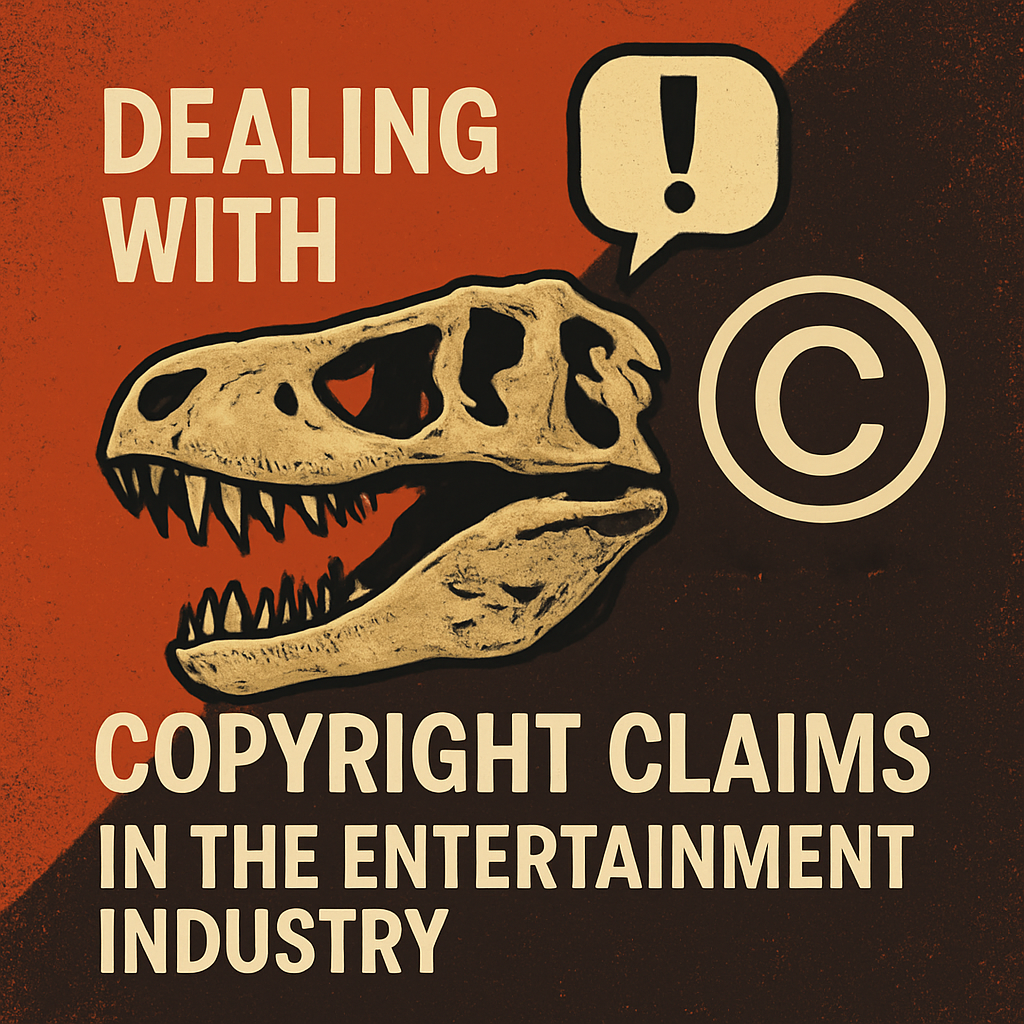
Welcome to the world of screenshot-to-code generators — tools that use AI and no-code logic to replicate functional software from images. These platforms (like Galileo AI, Builder.io, and Uizard) promise rapid prototyping, faster MVP launches, and a lower barrier to entry for founders, designers, and product teams alike.

But while the tech is impressive, the legal waters are murkier. Here’s the pleasure and the pitfall.


🚀 The Pleasure: Design to Prototype at Lightspeed

The promise is seductive:

  • Rapid prototyping: What used to take weeks of front-end dev can now take hours — sometimes minutes.

  • Visual to functional: AI converts static designs (or even screenshots of existing apps) into working interfaces with mock data or basic logic.

  • Lower costs: Startups or solo devs can build more for less — less code, less labour, and less time.

Tools like Galileo AI and Uizard are being used to generate mock admin panels, mobile UI concepts, and even pitch-ready MVPs. They’re ideal for internal dashboards, client demos, or iterating fast before investing in full-stack builds.

But many users go further — taking screengrabs from existing platforms (think Notion, Salesforce, Figma, Xero) and asking the AI to “make me one of these.”

And that’s where the problems begin.


⚠️ The Pitfall: Copyright, Clones, and Clean Hands

Just because a tool can replicate an interface doesn’t mean you should — especially if your starting point is a screenshot of someone else’s software.

Here are the big legal traps to watch out for:

1. Copyright in the Interface

While copyright doesn’t protect ideas, it does protect expressions — including graphic design, layout, icons, fonts, and even the “look and feel” of certain interfaces. If your cloned UI copies the visual design of another product too closely, you may be infringing copyright (or at least inviting a legal headache).

Australia’s Desktop Marketing Systems v Telstra [2002] FCAFC 112 reminds us that copyright can exist in compilations of data or structure — not just in pretty pictures.

2. Trade Dress and Reputation

Even if your app doesn’t copy the code, a lookalike interface could fall foul of passing off or misleading conduct laws under the Australian Consumer Law if it creates confusion with an established brand. That risk increases if you’re operating in a similar space or targeting the same user base.

The global tech giants have deep pockets — and they’ve sued for less.

3. Terms of Use Breaches

Many platforms prohibit copying or reverse engineering their interfaces. Uploading screenshots of their product to an AI builder might violate their terms of service — even if your clone is only for internal use.

This isn’t just theory: platforms like OpenAI and Figma already use automated tools to detect and act on terms breaches — especially those that risk commercial leakage or brand dilution.

4. No Excuse Just Because the Tool Did It

You can’t hide behind the AI. If your clone infringes IP rights, you’re liable — not the platform that helped you build it. The tool is just that: a tool.

In legal terms, there’s no “my AI made me do it” defence.


🤔 So What Can You Do?

  • ✅ Use these tools for original designs: Sketch your own wireframes, then let the AI flesh them out.

  • ✅ Take inspiration, not duplication: You can draw ideas from good UI — but avoid replicating them pixel-for-pixel.

  • ✅ Use public design systems: Many platforms release UI kits and components under open licences (e.g., Material UI, Bootstrap). Start there.

  • ✅ Keep it internal: If you must replicate an existing interface to test functionality, don’t deploy it publicly — and definitely don’t commercialise it.

  • ✅ Get advice: If you’re close to the line (or don’t know where the line is), speak to an IP lawyer early. Clones are cheaper than court.


🧠 Final Thought: Just Because You Can…

…doesn’t mean you should.

AI is rapidly transforming the way software is built — but it’s also tempting users to cut corners on IP. Using these tools responsibly means treating screenshots not just as pixels, but as possibly protected property.

Build fast — but build clean.

Filed Under: AI, Copyright, Digital Law, IP, Technology Tagged With: AI, Copyright, Digital Law, IP, Technology

July 3, 2025 by Scott Coulthart

Extinct Rights and Existential Threats: Copyright Claims that Shouldn’t Bite, But Still Do

In the world of entertainment, nothing stops a production faster than a copyright claim — even when the claimant doesn’t actually have a leg (or claw) to stand on.

Take, for example, a recent kerfuffle involving a dinosaur skull. Yes, a dinosaur skull. A marketing team used a stock image of a fossil for a film poster. Shortly after, they received a cease and desist from someone asserting copyright over the image — or more nebulously, over “the representation” of the skull itself. A fossilised jawbone that hasn’t had an original idea in 66 million years? Not the most obvious candidate for copyright protection.

And yet, the production company found itself in a bind. Time was short, the distributor was nervous, and the platform had already flagged the content under its automated systems. Legally, the claim didn’t stack up. Commercially, it still had teeth.

Welcome to the prehistoric jungle of copyright brinksmanship.

When Copyright Doesn’t Exist (But the Threat Still Does)

Under Australian law — and most copyright regimes — not everything is capable of being protected:

  • Natural formations (like fossils, mountains, or sea shells)? No copyright.

  • Basic factual photos taken with no creativity (e.g. museum catalogue snaps)? Likely not protected, or may already be in the public domain.

  • Ancient artefacts or artworks? Copyright has almost certainly expired — assuming it existed in the first place.

Even modern reproductions of old things don’t necessarily create new rights. The High Court in IceTV Pty Ltd v Nine Network Australia Pty Ltd [2009] HCA 14 was crystal clear: originality matters. Sweat of the brow won’t cut it.

But that doesn’t stop people — or bots — from claiming rights anyway. Particularly when money, notoriety, or mistaken beliefs are at play.

The Problem with Platform Panic

Most modern disputes don’t start in court — they start with takedown notices:

  • A DMCA claim to YouTube,

  • A flagged post on Meta or TikTok,

  • A licensing hold-up at the distributor level.

These processes are fast, opaque, and slanted toward rights holders (real or imagined). Fighting them requires time and evidence. Meanwhile, your release window slips away and your investor starts asking questions.

What Should You Do? Five Jurassic Principles

1. Know What You’re Looking At
Ask: Is the underlying subject matter capable of copyright protection? A taxidermied tiger, a Greco-Roman bust, or a piece of driftwood might not pass the threshold.

2. Trace the Chain
Even if the subject is unprotectable, the photograph or render might be. But who owns it? Was it created under licence? Is it truly original?

3. Don’t Assume the Claimant Understands Copyright Law
Many people think “I took a photo, so I own the image of the thing in the photo.” That’s not how it works. Be prepared to explain gently (or not so gently).

4. Be Ready to Push Back
If you’re legally in the clear, a well-structured rebuttal often gets the job done. Cite relevant case law, identify flaws in the claim, and invite the claimant to back down — preferably in writing.

5. But Be Prepared to Deal
Sometimes, you do a deal not because the claim is strong, but because the alternative is too costly. A nuisance settlement, a rights clarification, or a rapid poster redesign might save your release. That’s not weakness — that’s triage.

Final Thought: A Question of Extinction

When copyright claims are fossilised nonsense, you don’t need to panic — but you do need to be strategic. Entertainment projects move fast, and delays can cost more than a licence ever would. Know your rights, document your sources, and don’t be afraid to call a bluff.

But also? Don’t let a prehistoric claim derail your production. Even in the Jurassic jungle of IP, survival is about knowing when to roar and when to run.

Filed Under: Copyright, Entertainment, IP Tagged With: Copyright, Entertainment, IP

  • « Go to Previous Page
  • Go to page 1
  • Go to page 2
  • Go to page 3
  • Go to page 4
  • Go to page 5
  • Go to Next Page »

Primary Sidebar

Recent Posts

  • 🏇 When the Race Stops a Nation — Who Owns the Moment?
  • AI Training in Australia: Why a Mandatory Licence Could Be the Practical Middle Ground
  • AI-Generated Works & Australian Copyright — What IP Owners Need to Know
  • When Cheaper Medicines Meet Patent Law: Regeneron v Sandoz
  • #NotThatFamous: When Influencer Buzz Fails the s 60 Test

Archives

  • November 2025 (1)
  • October 2025 (14)
  • September 2025 (21)
  • August 2025 (18)
  • July 2025 (16)
  • June 2025 (21)
  • May 2025 (12)
  • April 2025 (4)

Footer

© Scott Coulthart 2025