The Rooh Afza Wars: Another Chapter in a Family Feud Over Syrupy Rights
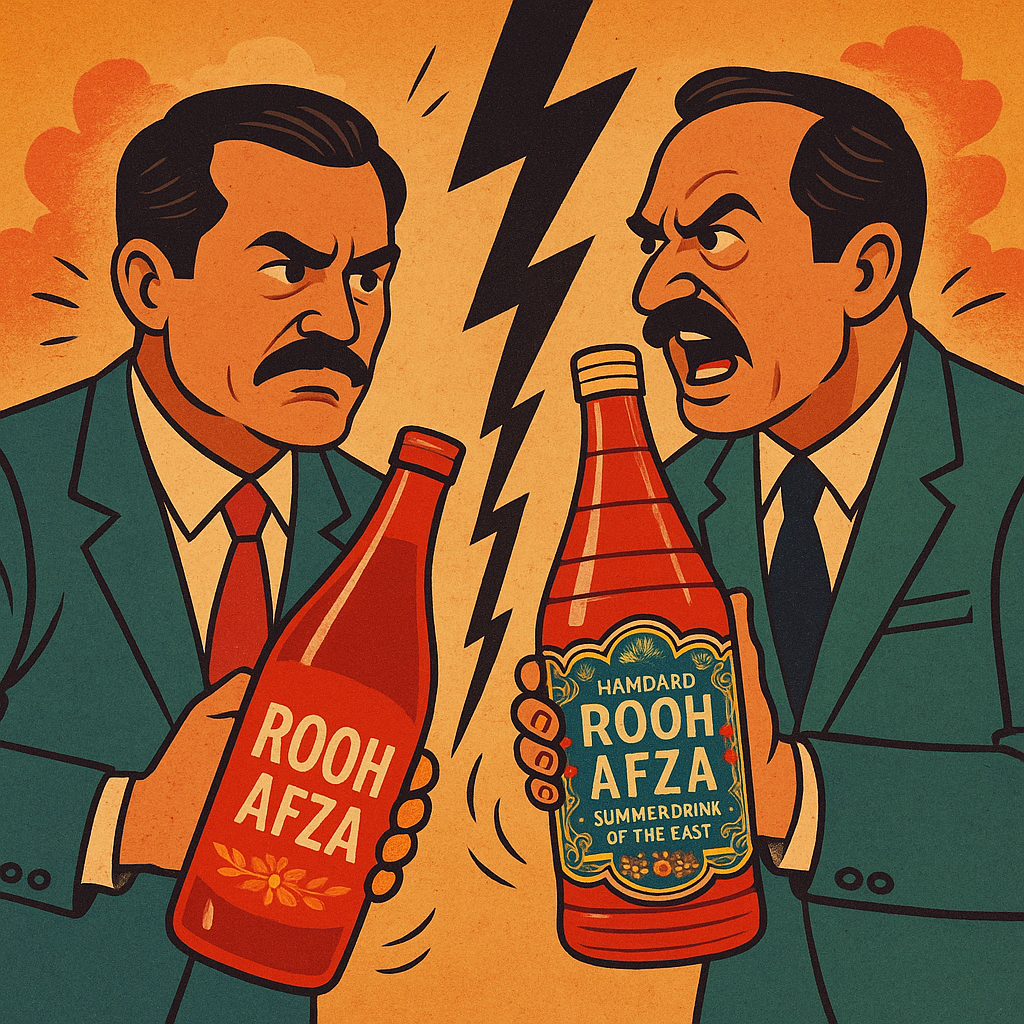 If you thought brand disputes were just about logos and lawyers, think again. Sometimes, they carry the weight of history, partition, and family legacies.
Case in point: Hamdard National Foundation (India) v Hamdard Laboratories (WAQF) Pakistan [2025] ATMO 169 — the latest Australian skirmish in the century-long saga over the famous Rooh Afza drink.
A drink with history (and baggage)
Rooh Afza isn’t just a syrup. It was first concocted in Delhi in 1906 by the Hamdard Dawakhana Clinic. When Partition came in 1947, so did a business split: one son stayed in India (today’s opponent), another went to Pakistan (today’s applicant). Since then, both sides have sold Rooh Afza products in their respective home markets — and fought trademark battles across the globe.
Think Coca-Cola vs Pepsi, but with cousins at the helm.
The fight in Australia
The Pakistani arm applied in Australia for two marks:
-
ROOH AFZA in a fancy script (TM 2279408), and
-
a florid HAMDARD ROOH AFZA SUMMER DRINK OF THE EAST composite (TM 2279409).
Both were opposed by the Indian arm, which already owns the plain word mark ROOH AFZA (TM 1633931) here.
The delegate held:
-
The words ROOH AFZA are the “prominent and memorable” feature of both sides’ marks.
-
That makes the applied marks deceptively similar to the opponent’s word mark under s 44 of the Trade Marks Act 1995 (Cth).
-
The Pakistani applicant’s attempt to rely on prior use (s 44(4)) fell flat — their evidence showed Rooh Afza syrups had trickled into Australia since 2004, but the branding was inconsistent. Multiple trade mark variants were used, social media was directed at Pakistani consumers, and documentation was patchy.
Result: both marks refused, with costs awarded against the applicant.
Why it matters
This is more than a tale of two syrups. It’s a case study in evidence strategy:
-
Inconsistent branding kills your case. The delegate couldn’t be sure which “Rooh Afza” mark was really used in Australia, and when.
-
Records matter. Gaps in invoices and an absence of dated packaging images left the applicant vulnerable.
-
Family feuds spill into IP. The long-running India/Pakistan split over Hamdard’s legacy ensures we’ll see more of these fights around the world.
For Australian brand owners, the lesson is simple: if you’re trading here, make sure you keep consistent, dated, and local evidence of use. Courts and hearing officers won’t give you much sympathy if your story is clouded by multiple logos and poor record-keeping.
Final pour
The Rooh Afza wars are far from over. But in Australia, at least for now, the syrup tilts in favour of the Indian side. The Pakistani arm walks away empty-handed — and a little lighter in the pocket.
⚖️ Case reference: Hamdard National Foundation (India) v Hamdard Laboratories (WAQF) Pakistan [2025] ATMO 169 (Delegate Irgang, 28 August 2025).