• Skip to primary navigation
  • Skip to main content
  • Skip to primary sidebar
  • Skip to footer

IPMojo

  • About IP Mojo
  • About Scott Coulthart
  • CONTACT
BOOK AN APPOINTMENT

IP

August 13, 2025 by Scott Coulthart

What’s in a Name? Paige LLC Fails to Block “Sage + Paige” Despite Collab Confusion Claims

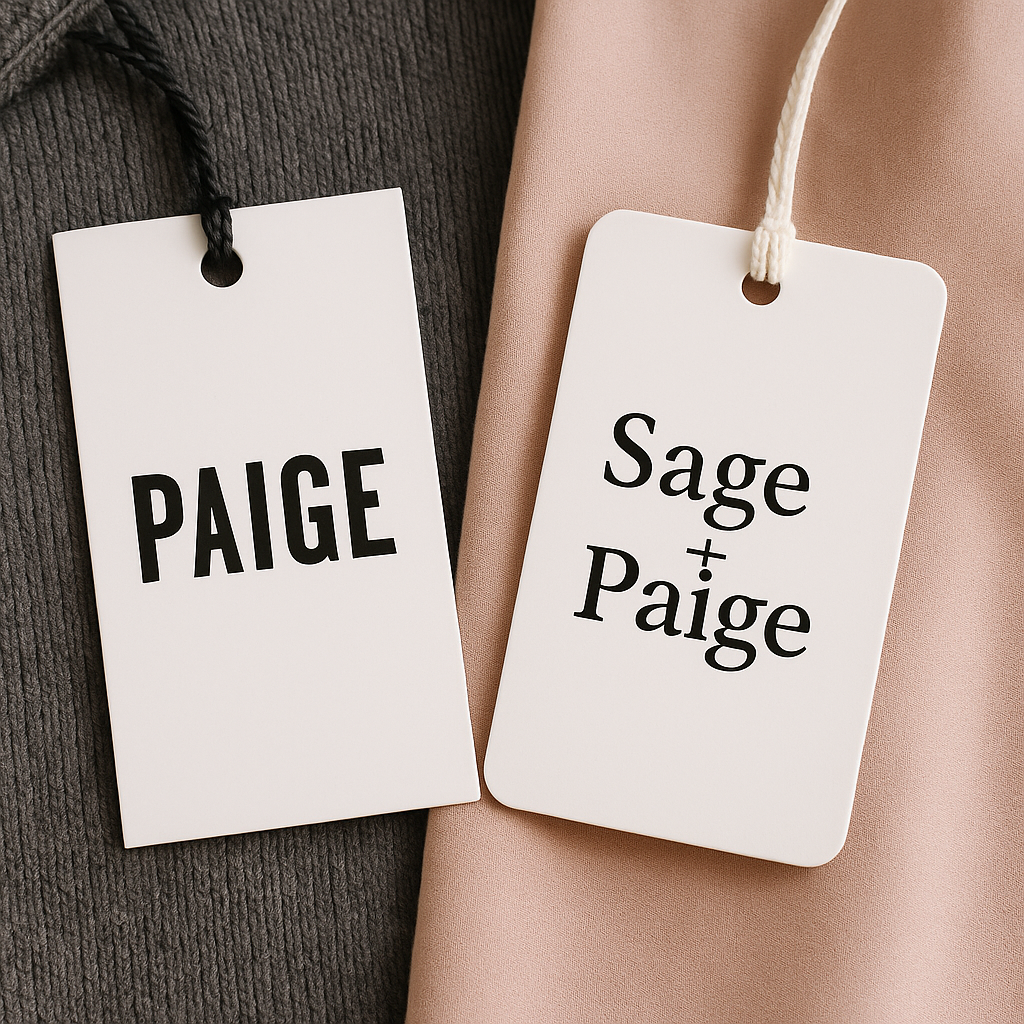
In a decision straight from the catwalk of modern trade mark law, the Federal Court has dismissed a challenge by Californian fashion label Paige LLC against the Australian brand Sage + Paige, ruling that the newer composite marks are not deceptively similar to PAIGE and won’t mislead fashion-savvy Aussie consumers.
Decision: Paige LLC v Sage and Paige Collective Pty Ltd [2025] FCA 750 (10 July 2025) (Needham J)

👗 Background: Denim v Dresses

Paige LLC, known globally for its premium denim and celeb collabs, owns the trade mark PAIGE in Australia. When Aussie fashion house Sage and Paige Collective Pty Ltd applied to register two composite trade marks—Saige + Paige (stylised with a pink circle) and Sage + Paige (stylised, but text-only)—the US company objected under:

  • Section 44: deceptive similarity to its PAIGE marks, and

  • Section 60: likelihood of confusion due to its established reputation.

The core argument? That the “+” sign in Sage + Paige might lead consumers to believe it’s a collaboration with PAIGE—a well-known practice in fashion.

⚖️ The Court’s Take

Justice Needham accepted that brand collaborations (or “collabs”) are indeed a recognised trend, and the notional consumer might think of such things. But that wasn’t enough.

“The use of two names with the same stylisation tend to indicate… a singular brand name, rather than two separate, collaborating, brand names.” — Needham J at [89]

Despite PAIGE having a modest reputation in Australia, the Court found no real, tangible danger of deception or confusion. The composite marks were deemed to stand on their own: visually unified, aurally distinct, and conceptually grounded in a “two names, one brand” tradition, not a collab cue.

🧵 Key Takeaways

  • “+” doesn’t equal collab: Just linking two names with a plus sign doesn’t automatically imply co-branding, even in industries where collabs are common.

  • Given names don’t always dominate: Paige is not an invented or highly distinctive term; it’s just a given name, and its presence doesn’t override the overall impression.

  • Stylisation and consumer habits matter: The Court looked at actual branding trends and consumer practices (like buying online and familiarity with fashion collabs).

🪡 The Bottom Line

This is a rich example of the law stitching together traditional principles of deceptive similarity with modern commercial practices. It shows how context—consumer knowledge, industry trends, brand stylisation—can make or break a trade mark opposition, even where name overlap exists.

For now, Sage + Paige gets to strut the IP runway without tripping over PAIGE’s heels.

Filed Under: Fashion Law, IP, Trade Marks Tagged With: Fashion Law, IP, Trade Marks

August 12, 2025 by Scott Coulthart

Part 1 – Copyright 101: What It Is and Why It Matters
If you create, you already own more than you think.

Every day, Australians are producing things that copyright protects—often without even realising it. A marketing brochure. A wedding photograph. A hand-drawn logo. The source code for an app. The jingle that gets stuck in your head from your local café’s radio ad.

Copyright is the invisible shield that springs into existence the moment an original work is created. No forms to fill in, no fees to pay, no government stamp of approval required. In Australia, the protection is automatic.


So, what does copyright actually protect?

Quite a lot. The Copyright Act covers a wide range of works, including:

  • Literary works – from novels and poetry to software code and blog posts

  • Musical works – original music compositions

  • Dramatic works – plays, screenplays, choreography

  • Artistic works – paintings, photographs, drawings, architectural plans

  • Films – movies, short films, animations

  • Sound recordings – audio files, albums, podcasts

  • Broadcasts – radio and television transmissions

  • Published editions – the typographical layout of printed material

What it doesn’t protect is just as important: ideas, titles, names, slogans, methods, or styles. Those might fall into other areas of intellectual property, like trade marks, patents, or designs.


The rights you get as a copyright owner

As the owner, you have exclusive control over how your work is used. That means you can:

  • Reproduce it – make copies, whether physical or digital

  • Publish it – make it available for the first time

  • Communicate it – share it online, broadcast it, or stream it

  • Adapt it – turn your novel into a screenplay, or your photo series into a calendar

These rights are known as economic rights—and they’re the foundation for licensing deals, royalties, and other commercial uses.


How is copyright different from trade marks and patents?

Think of it this way:

  • Copyright protects the original expression of an idea (e.g. the book you wrote).

  • Trade marks protect your brand identity (e.g. the name and logo on the cover).

  • Patents protect new inventions or processes (e.g. a new kind of printing press).

  • Design rights protect the visual appearance of a product (e.g. the unique shape of your book’s slipcase).

Different tools, different jobs—but all part of the IP toolkit.


Why it matters

In a world where content is copied, reposted, and remixed in seconds, copyright is one of the most important protections a creator or business can have. It helps you:

  • Stop unauthorised copying or use

  • Control how your work is presented and distributed

  • Monetise your creativity through licensing and sales

  • Safeguard your competitive edge

The bottom line? If you create something original, copyright is already in your corner—you just need to know how to use it.


Next in our “Copy That” series:
Part 2 – Who Owns Copyright? Navigating the Rights Minefield
Because owning it isn’t always as simple as creating it.

Filed Under: Copyright, Copyright Series, IP Tagged With: Copyright, Copyright Series Part 1, IP

August 11, 2025 by Scott Coulthart

Never Get Busted! — Principal Director Dispute Stops the Projectors Rolling

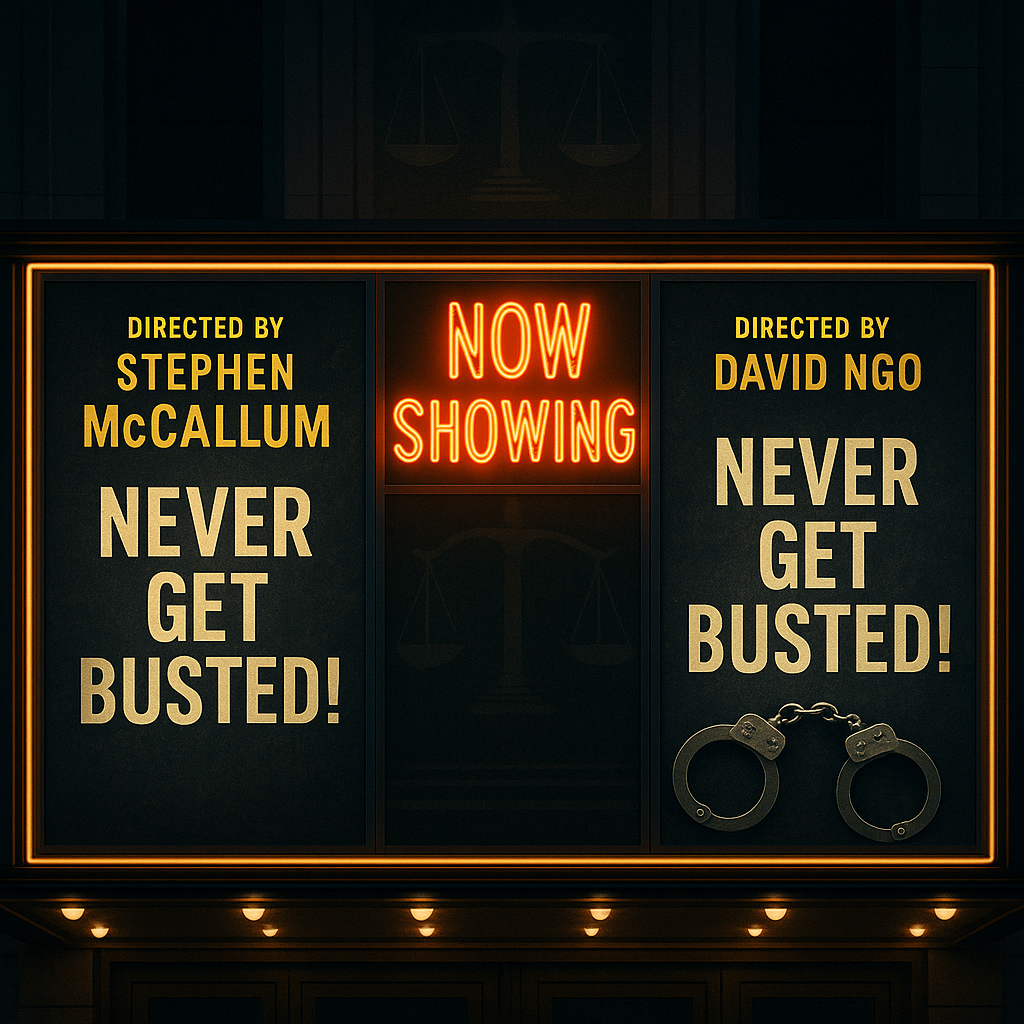
The Federal Court has issued an injunction two days before the Melbourne International Film Festival (MIFF) in relation to the credits of a documentary called Never Get Busted! after one of its co-directors claimed the other director was busted crediting himself as “Principal Director”.

The fight for “Principal Director”

Stephen McCallum and David Ngo both directed the documentary, but McCallum claimed he was the Principal Director under both his contract and the Copyright Act 1968 (Cth).

That distinction matters. Section 191 says that where there’s more than one director, “director” means principal director for moral rights purposes. Being named principal director can influence reputation, career progression, and eligibility for awards.

Ngo accepted McCallum was a director, but said he (Ngo) was the principal director — especially after McCallum allegedly stepped back from key phases of production.

Moral rights + misleading conduct

McCallum alleged:

  • Infringement of his moral rights — failure to attribute him as principal director and false attribution of Ngo as principal director (ss 189, 191, 195AW).

  • Misleading and deceptive conduct under the Australian Consumer Law (ACL s 18) — particularly in promotional materials suggesting Ngo alone “helmed” the film.

The respondents countered that McCallum had waived or consented to infringements via a contractual clause (cl 6.2) and that the current festival credits, listing both men as “Directors”, were enough.

Why credit order matters

Industry evidence showed that:

  • The phrase “Directed by” — and the order of names — signals who is principal director.

  • The person listed last in opening credits (or first in closing credits) is usually the principal director.

  • Festival program notes, Q&A invitations, and even website blurbs shape perception within the industry, not just for audiences.

Here, McCallum’s name came second to Ngo in credits and promotional materials, with Ngo described as “helming” the project. The Court found this created a real risk of conveying Ngo as sole principal director.

The injunction

Justice Shariff found a serious question to be tried and that the balance of convenience favoured McCallum. The injunction stopped the screening and promotion unless:

  • The credits read “Directed by Stephen McCallum” and did not say “Directed by” for Ngo; or

  • Promotional materials gave McCallum the principal director attribution.

McCallum’s alternative — stating the credits were “the subject of court proceedings” — was rejected as commercially riskier.

Why it matters

This isn’t just about ego or font order. It’s about:

  • The legal and reputational value of creative credits.

  • How moral rights, contracts, and the ACL can collide.

  • How quickly these disputes can boil over when a premiere’s at stake.

💡 IP Mojo Tips:

  • Lock it in — Nail down exactly how you’ll be credited in your contract, including the exact wording and where it appears.

  • Think beyond the film — Festival programs, Q&A panels, and press releases are part of your “attribution ecosystem”.

  • Watch the waivers — A broad moral rights consent might not save the other side if it clashes with specific credit clauses.

The sequel? The full trial is set for September 2025. Pass the popcorn.

Filed Under: Contracts, Entertainment, Film Law, IP Tagged With: Contracts, Entertainment, Film Law, IP

August 8, 2025 by Scott Coulthart

Brand Control, Part 10: “The Brand Lives On” — Trade Marks in Exit, Investment, and Succession

Your brand might be your single most valuable asset. But when serious money is on the table — whether in an investment round, a business sale, or passing the business to the next generation — the question isn’t just what your brand is worth. It’s whether it can stand up to scrutiny.


💰 IP in Due Diligence

Investors, acquirers, and their lawyers will dig deep. Expect questions like:

  • Does the entity actually own the trade mark registrations?

  • Are they registered — and in the right markets?

  • Are there pending disputes, opposition proceedings, or known copycats?

If the answers aren’t clear, expect your deal timetable (and possibly your deal value) to suffer.


🔗 Assignment and Licensing Clean-Up

A surprising number of brands have messy ownership histories. Fix them now, not during due diligence:

  • Ensure every assignment is documented — especially transfers from founders or prior owners.

  • Identify and resolve any co-ownership or “grey” IP where a contractor or third party may have rights.

  • Review licensing arrangements, particularly where related entities use the brand, to ensure they’re properly authorised.

An untidy chain of title can turn into a deal-breaker.


🧓 Succession Planning

For personal brands and family-run businesses, registered trade marks make succession far smoother. A registered right can be assigned or licensed in a clean, documented transfer — helping preserve not just the name, but the goodwill behind it.


💡 IP Mojo Tip
Your brand won’t retire when you do. If you want it to survive a sale, investment, or handover, protect it like an asset — not a slogan. A clean title today can be worth millions tomorrow.

Filed Under: IP, Trade Mark Series, Trade Marks Tagged With: IP, Trade Mark Series Part 10

August 6, 2025 by Scott Coulthart

Brand Control, Part 9: “From Garage to Global” — Building an International Brand Protection Strategy

Your brand might be born in a garage, a studio, or a co-working hub — but if your business has international ambitions, your trade mark strategy needs to grow up fast.

Exporting? Licensing? Franchising? Operating online with overseas customers? You’ll need more than an Australian trade mark certificate. You’ll need an international brand protection plan.

🌍 Start Local, Think Global

The journey starts at home. To secure international protection, you’ll almost always need to file in your “home” country first. For Australian businesses, that usually means filing with IP Australia before looking abroad.

From there, you have options:

1. The Madrid Protocol
This is the global trade mark filing system administered by WIPO. It lets you extend protection to 130+ member countries through a single application, based on your Australian filing. It’s cost-effective, streamlined, and a good first step into international protection.

2. National Filings
Some jurisdictions don’t play well with the Madrid system. Others may be technically covered by Madrid but are better handled directly due to practical issues or local procedural hurdles. In those cases, it’s worth filing directly through local counsel.

📆 Timing Is Critical

Trade mark rights are territorial — and in some jurisdictions, the “first to file” gets the prize, regardless of who used it first.

Fortunately, the international system gives you a 6-month priority period from the date of your first (Australian) application. If you file overseas within that time, your foreign applications are treated as having the same filing date as your original Australian one.

Miss the window? You risk losing rights to local trade mark squatters — especially in high-risk jurisdictions like China or parts of South America.

✋ Local Sensitivities and Brand Bloopers

Global trade mark strategy isn’t just about paperwork. It’s also about cultural nuance, language, and local business practices.

Brand names that work in English might fall flat — or worse — elsewhere.
The Mitsubishi Pajero famously ran into trouble in Spanish-speaking markets because “pajero” has an unfortunate slang meaning. Even benign names can run into problems if they’re hard to pronounce, culturally insensitive, or already associated with local businesses.

And in China, don’t delay. It’s a strict “first to file” jurisdiction, and trade mark squatting is endemic. If your brand has potential in China, file early — even if you’re not trading there yet.

✅ Practical Tips for Expanding Globally

  • File early: Don’t wait until you enter a market. File when you’re even considering it.

  • Use the Madrid Protocol — but wisely: It’s efficient, but not always the best fit for every country.

  • Check for conflicts: Do clearance searches in each target market to avoid headaches later.

  • Localise carefully: Think about transliteration, local language versions, and regional variants of your mark.

  • Work with local counsel: Especially in high-risk or high-value jurisdictions.

💡 IP Mojo Tip:

Your brand can travel — but it needs a passport.

Registering internationally isn’t just a legal formality. It’s your defence against copycats, squatters, and lost market opportunities.

A global brand strategy doesn’t mean filing everywhere. It means filing smart — in the markets that matter to your business, at the right time, in the right way.

Filed Under: IP, Trade Mark Series, Trade Marks Tagged With: IP, Trade Mark Series Part 9

August 5, 2025 by Scott Coulthart

Café Conundrum: Black Star Pastry’s Trade Mark Trouble

Richards v Black Star Pastry Pty Ltd (No 2) [2025] FedCFamC2G 1226 is a cautionary tale in brand coexistence gone wrong — where parallel growth by two businesses using similar names eventually led to a Federal Circuit and Family Court stoush over coffee, cakes and trade mark rights.

Brewing conflict

Martin Richards and his then-wife started a Brisbane-based social enterprise in 2007 called Blackstar Coffee, roasting beans and selling espresso from carts and cafés. He registered the word mark BLACKSTAR in 2007 and a composite BLACKSTAR COFFEE mark in 2009, covering coffee, coffee beverages and related goods.

Unbeknownst to him at the time, pastry chef Christopher Thé opened a bakery in Newtown, Sydney in 2008 under the name Black Star Pastry — complete with its now-famous strawberry watermelon cake and a reputation that soon spread globally (and virally). Thé registered Black Star Pastry as a business name in 2008 and eventually incorporated Black Star Pastry Pty Ltd (BSP) in 2011.

Though Richards became aware of the Sydney business around 2011 and made contact with Thé, no formal resolution followed. Over the next decade, BSP grew into a multi-store operation in NSW and Victoria, increasingly offering café services and coffee beverages — areas overlapping with Blackstar Coffee’s core trade mark rights.

Trade marks collide

The dispute centred on whether BSP’s use of the phrase BLACK STAR PASTRY — including in logos and retail branding — infringed Richards’ earlier BLACKSTAR marks.

BSP argued that:

  • Its core business was bakery, not coffee;

  • The term Black Star Pastry was distinguishable;

  • Its trade marks had been accepted and registered by IP Australia after amending the specification to exclude “café services” and “specialty coffee retailing”;

  • Any coffee sales were ancillary or covered by its own “bakery services” registrations;

  • Richards had acquiesced by failing to object earlier.

Richards, meanwhile, argued that BSP:

  • Was selling coffee and operating cafés under the Black Star Pastry name;

  • Was using the sign as a trade mark in relation to goods and services covered or closely related to his registrations;

  • Was likely to cause consumer confusion;

  • Couldn’t rely on s 122(1)(e) as a defence because coffee wasn’t squarely within BSP’s registered bakery services;

  • Should not benefit from any perceived delay in enforcement.

The Court’s blend

Judge Manousaridis found in favour of Richards on the infringement claim. The key findings:

  • BSP was using BLACK STAR PASTRY as a trade mark for both coffee and café services.

  • These services were either directly covered by or closely related to the BLACKSTAR registrations.

  • The marks were deceptively similar — particularly given the visual and phonetic similarity, the shared “Black Star” element, and the use in closely related contexts (coffee and cafés).

  • BSP could not rely on its own trade mark registrations as a defence under s 122(1)(e) — because those registrations expressly excluded coffee retailing and café services.

  • Richards’ prior knowledge and phone call with Thé did not amount to acquiescence or delay sufficient to bar relief.

Takeaways: more than just crumbs

This decision serves up some useful reminders:

  • Clearance is key: Registering a business name doesn’t grant trade mark rights — and failing to conduct proper searches can be costly a decade down the line.

  • Expansion needs a check-up: A pivot or expansion into adjacent services (like coffee within a bakery) may breach earlier rights, even if your mark was initially registrable with exclusions.

  • Acquiescence isn’t easily made out: A polite phone call in 2011 won’t shield years of brand growth from an infringement claim — especially when the overlap intensifies over time.

  • Name components matter: While Black Star Pastry and Blackstar Coffee may sound just different enough to lawyers, the average café-goer isn’t parsing the spacing.

In the café world, Black Star may once have stood for two different brands in two different cities — but as the beans (and cakes) spread, the law says one star had to fall.

Filed Under: IP, Trade Marks Tagged With: IP, Trade Marks

  • « Go to Previous Page
  • Go to page 1
  • Interim pages omitted …
  • Go to page 5
  • Go to page 6
  • Go to page 7
  • Go to page 8
  • Go to page 9
  • Interim pages omitted …
  • Go to page 13
  • Go to Next Page »

Primary Sidebar

Recent Posts

  • 🏇 When the Race Stops a Nation — Who Owns the Moment?
  • AI Training in Australia: Why a Mandatory Licence Could Be the Practical Middle Ground
  • AI-Generated Works & Australian Copyright — What IP Owners Need to Know
  • When Cheaper Medicines Meet Patent Law: Regeneron v Sandoz
  • #NotThatFamous: When Influencer Buzz Fails the s 60 Test

Archives

  • November 2025 (1)
  • October 2025 (14)
  • September 2025 (21)
  • August 2025 (18)
  • July 2025 (16)
  • June 2025 (21)
  • May 2025 (12)
  • April 2025 (4)

Footer

© Scott Coulthart 2025